Nine decades of ion exchange
From the first synthetic resin bead to the critical-mineral separations that define the industry today.


Discovery
Commercialization
Chemistry Development & System Innovation
Application Unlocks
Rise of China
The first synthetic ion-exchange resins
Basil Adams and Eric Holmes, at the UK National Chemical Laboratory, condense phenol-formaldehyde resins that exchange ions, the first wholly synthetic ion exchangers. They make demineralization by resin possible, and the first commercial plant follows in 1937.

The polystyrene-DVB skeleton is born
Gaetano D'Alelio at General Electric (US Patent 2,366,007) copolymerizes styrene with divinylbenzene and sulfonates it, creating the crosslinked gel bead that is still the backbone of nearly every ion-exchange resin made today.

The Manhattan Project purifies the bomb
Wartime work at Oak Ridge and the Met Lab uses ion exchange to separate and purify plutonium and the rare-earth fission products, proving the technique on the hardest metal-separation problem of the age.

Amberlite and Dowex go commercial
Rohm & Haas (Amberlite IR-120) and Dow (Dowex 50) launch the first commercial strong-acid cation resins on the new polystyrene skeleton, replacing the brittle phenolic beads and starting the modern resin industry.

Rare earths separated for the first time
Frank Spedding and Jack Powell at the Ames Laboratory separate adjacent rare earths in kilogram quantities by ion exchange, perfecting displacement chromatography by 1954, the first practical route to pure individual rare-earth elements.

Strong-base anion resins unlock uranium leach
John McBurney's quaternary-ammonium strong-base anion resin (Rohm & Haas Amberlite IRA-400) loads uranyl sulfate and carbonate complexes straight from leach liquor, becoming the standard chemistry for uranium recovery.

Weak-acid cation resins for divalent metals
Methacrylic carboxylic-acid (weak-acid cation) resins from Rohm & Haas (Amberlite IRC-50) bind calcium and transition-metal cations with high capacity and easy regeneration, the complement to the strong-acid bead.

Resin-in-pulp recovers uranium
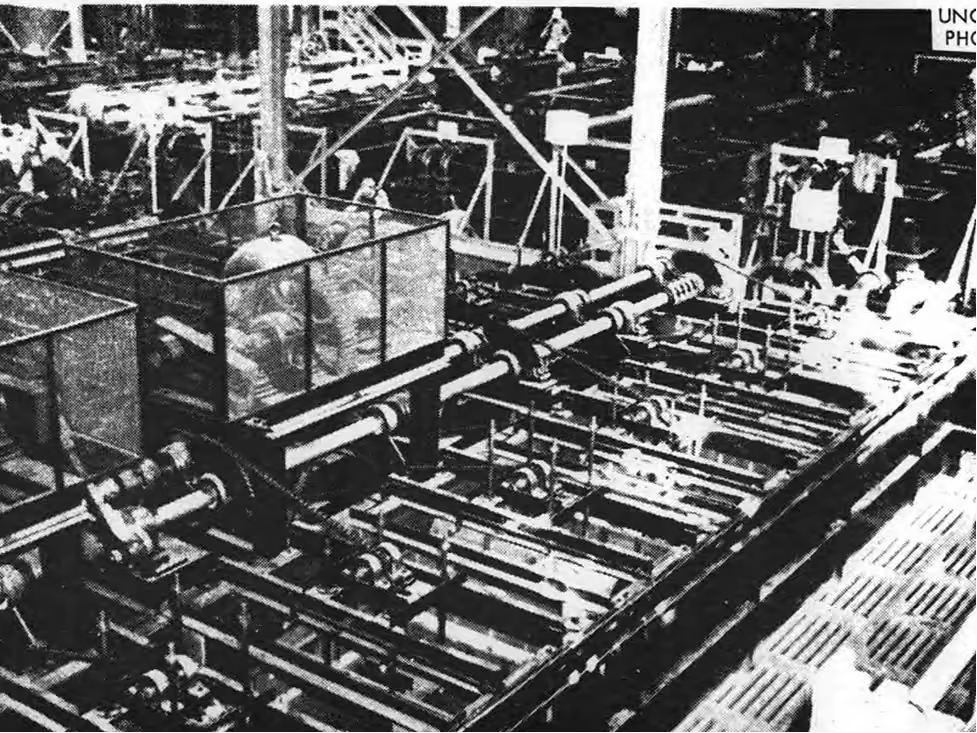
US AEC, South African and Soviet operations adopt resin-in-pulp, contacting strong-base anion resin directly with ground ore slurry to win uranium, the first large-scale hydrometallurgical use of ion exchange and later extended to gold, base metals and scandium/REE.
Weak-base anion resins for gold and uranium
Polyamine free-base (weak-base anion) resins from Rohm & Haas and Dow pick up gold cyanide, uranium and molybdenum from acidic liquors, an early selective chemistry for precious- and strategic-metal recovery.

The Higgins contactor: continuous ion exchange
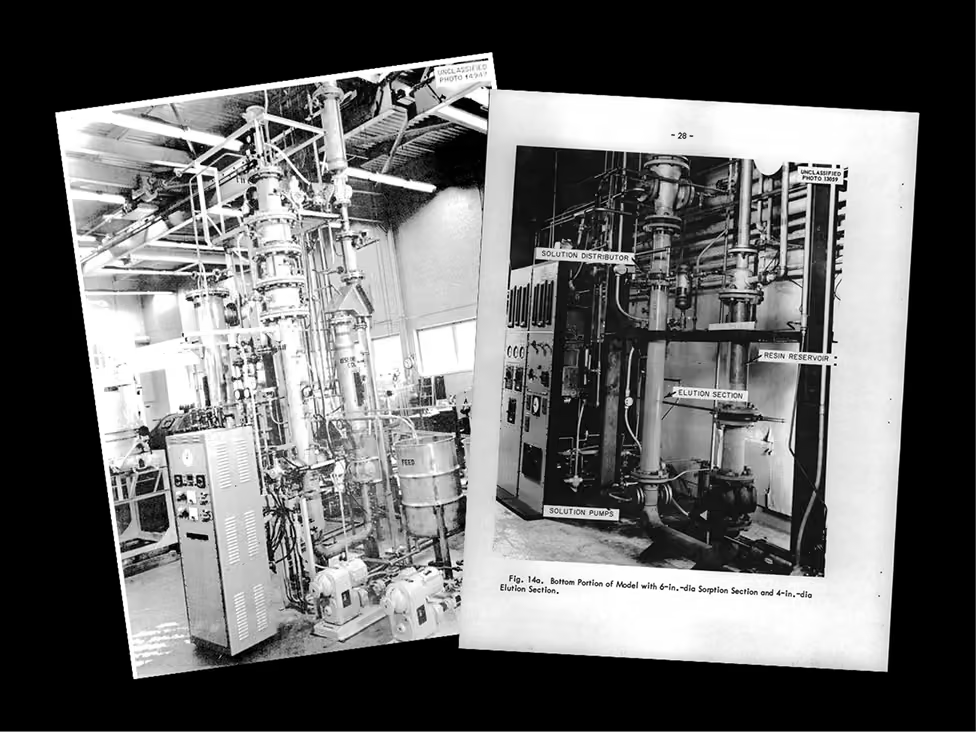
I.R. Higgins and J.T. Roberts at Oak Ridge build a moving packed-bed contactor that runs ion exchange continuously and countercurrently, the ancestor of every continuous-IX machine that follows.
The first chelating resin
Dow's Dowex A-1 (1959 patent) grafts iminodiacetic-acid groups onto the polystyrene bead, the first resin that binds metals by chelation rather than simple ion exchange, taking Cu, Ni and Zn and later softening Ca/Mg from brine.

UOP patents the Simulated Moving Bed
Donald Broughton and Clarence Gerhold at UOP patent the Simulated Moving Bed (Sorbex), using a rotary valve to mimic a moving adsorbent bed, the template for the continuous countercurrent separation later carried into hydrometallurgy.

Robert Kunin invents the macroreticular resin
Robert Kunin and colleagues at Rohm & Haas polymerize styrene-DVB in a poor solvent to make macroreticular (macroporous) beads with permanent pores and high surface area, robust in nonaqueous and oxidizing service.

Fluidized-bed ion exchange
The NIM (Mintek) lineage develops fluidized-bed ion exchange that loads resin directly from turbid, unclarified liquors, letting uranium plants skip costly clarification before the columns.

Macroporous resins scale up
Amberlyst acid catalysts and the Amberlite XAD adsorbent series carry the macroreticular structure into industrial catalysis, decolorization and adsorption, broadening ion-exchange resins far beyond water softening.

Thiol resins capture mercury
Thiol (mercaptan) resins such as Akzo's Duolite GT-73 use soft sulfur donors to scavenge mercury, and also silver, gold, palladium and lead, from process and waste streams down to trace levels.

The NIMCIX fluidized-bed column
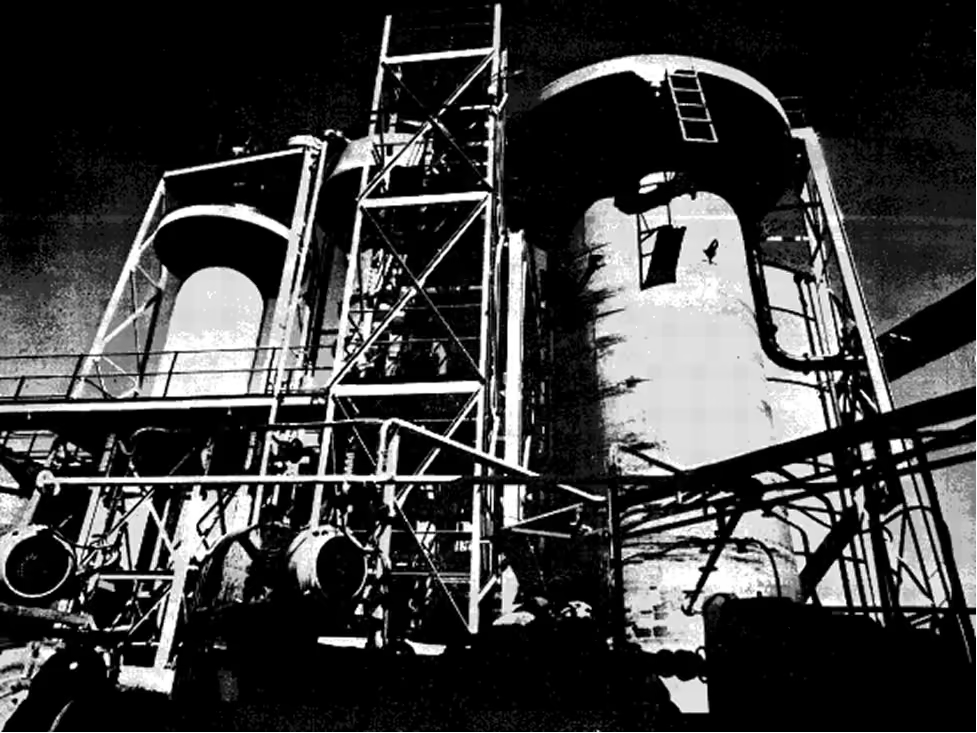
Mintek (NIM) in South Africa deploys the NIMCIX multistage fluidized-bed countercurrent column to load uranium continuously at large scale, making continuous ion exchange a production reality in hydrometallurgy.
The Himsley contactor
Himsley Engineering's multistage contactor moves resin in pulses between stacked compartments for continuous countercurrent ion exchange, applied to uranium, gold and base metals.

Bispicolylamine resin targets copper, nickel, cobalt
R.R. Grinstead's bispicolylamine resin at Dow (XFS-4195, later Dowex M4195) grabs copper, nickel and cobalt selectively from ammoniacal and acidic streams, a workhorse chemistry for base-metal refining and Ni/Co separation.
Amidoxime resins target uranium and gallium
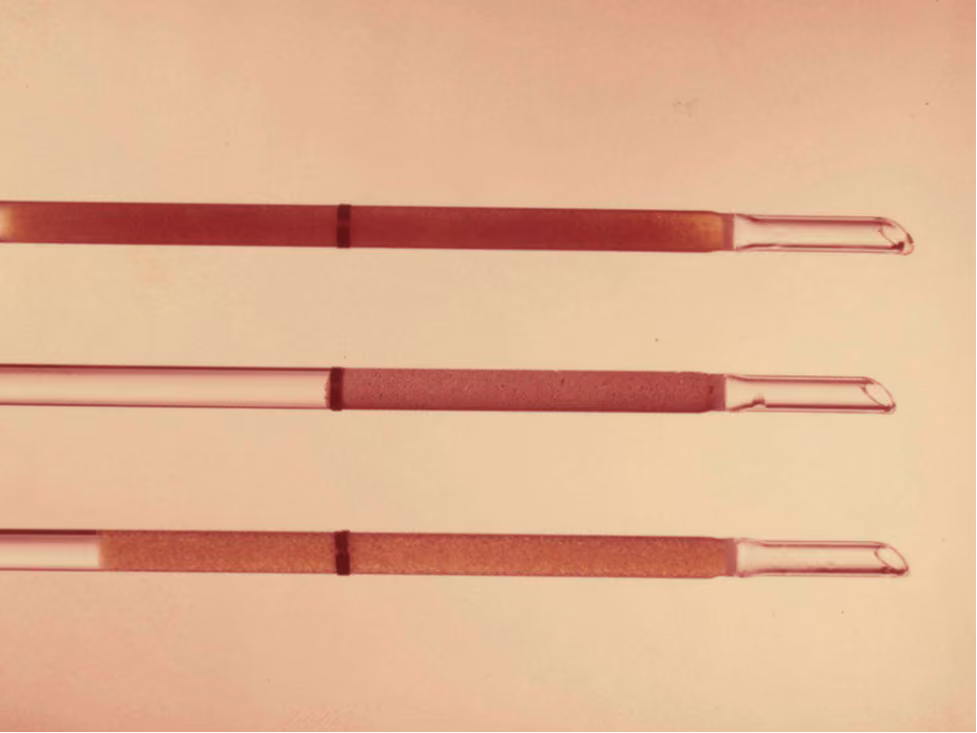
Amidoxime resins, pioneered by Japanese groups (Egawa, Sugasaka) for uranium from seawater, also recover gallium from Bayer aluminate liquor and vanadium.

Aminophosphonic resins reach REE and scandium
Aminomethylphosphonic resins (Bayer Lewatit TP260, Rohm & Haas Duolite ES-467) give strong, pH-tolerant binding of calcium from brine, lead and uranium, and the rare earths and scandium.

Thiourea resins for precious metals
Isothiouronium and thiourea (S,N-donor) resins such as Lewatit TP214 and Srafion NMRR bind the platinum-group metals (Au, Pd, Pt) and mercury, the selective chemistry behind precious-metal refining.

Monodisperse resins
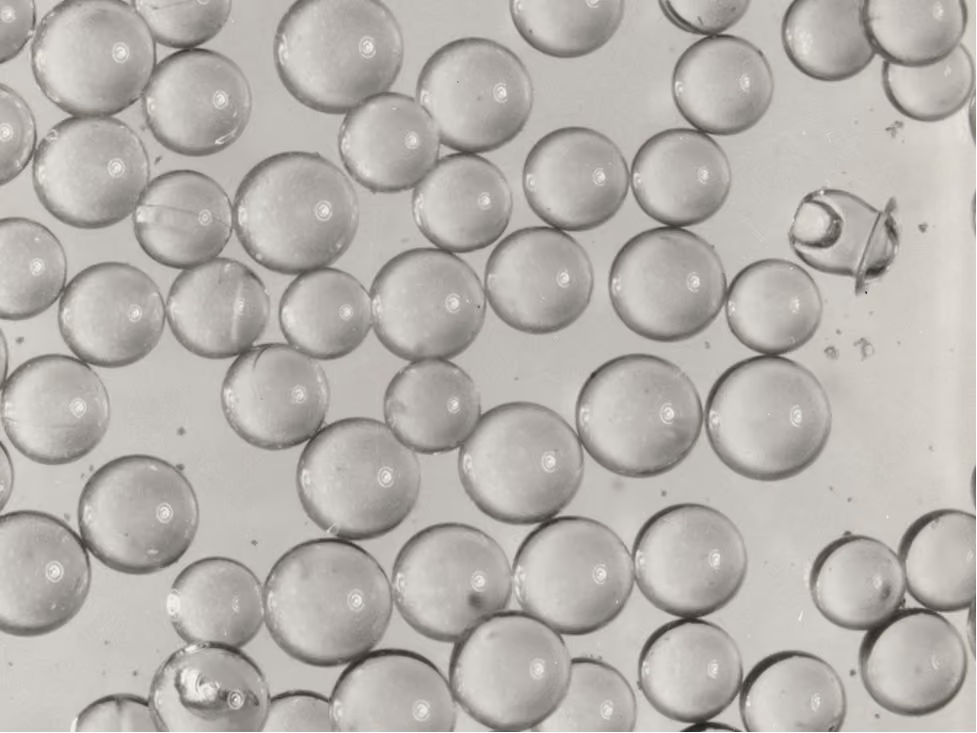
Jetting technology yields beads of a single uniform size (Bayer/Lanxess Lewatit MonoPlus, later Dow UPS and Purolite PFA). Monodisperse beads raise operating capacity and osmotic-shock stability versus the old heterodisperse grind.
Guanidine resins lock onto gold
Mintek's guanidine resin (Minix, manufactured by Dow) is a strong-base chemistry tuned for the aurocyanide complex, giving gold-selective recovery from cyanide leach liquors.

The continuous rotary carousel (ISEP)
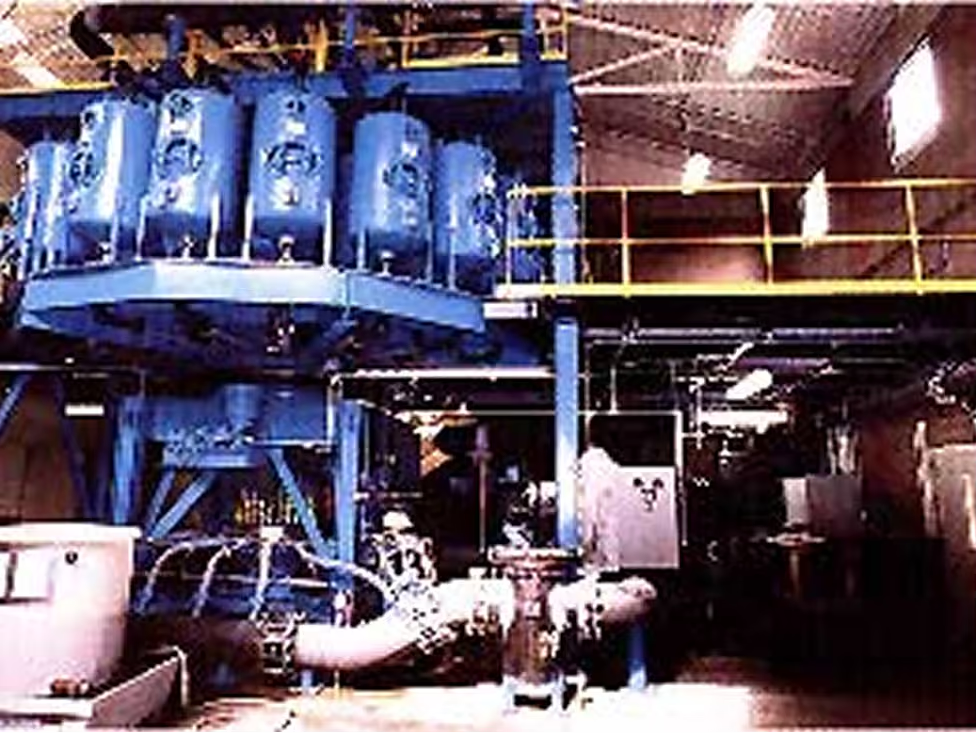
Advanced Separation Technologies (later Calgon Carbon) commercializes the ISEP continuous rotary carousel, rotating up to thirty resin columns past fixed ports for continuous recovery of uranium and other metals.
Resin-in-pulp recovers gold
Strong-base anion resins adsorb the gold-cyanide complex directly from leach pulp, reviving resin-in-pulp and resin-in-leach as a carbon-free route to gold, especially for clay-rich and preg-robbing ores.

Uranium in-situ recovery scales on resin
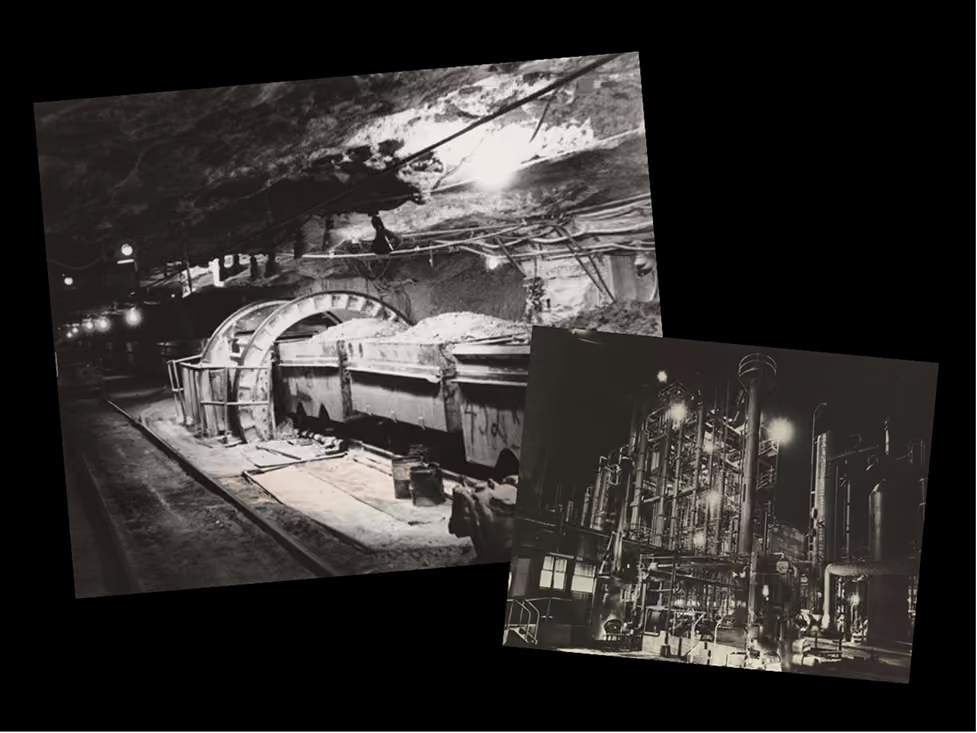
In-situ recovery, leaching uranium underground and stripping it onto strong-base anion resin, becomes the dominant low-cost uranium method, putting ion exchange at the center of the fuel-cycle front end.
Carousel resin-in-pulp (MetRIX)
Mintek and Kemix commercialize the MetRIX carousel, running resin-in-pulp continuously to recover gold and uranium straight from pulp without prior solid-liquid separation.

Dow acquires Rohm & Haas
Dow closes its 15.3-billion-dollar purchase of Rohm & Haas, uniting Dowex and Amberlite, the two foundational US resin brands, under one owner and reshaping the Western resin market.
Sunresin enters the hydrometallurgy market
Sunresin pushes beyond water and food-grade resins into metal recovery, supplying adsorbent and ion-exchange media plus continuous systems for uranium, rare earths and other hydrometallurgical streams.

Modular valve-array continuous ion exchange
Sunresin (alongside Puritech and Metso/Outotec) packages continuous ion exchange into compact valve-array skids, the system format behind modern lithium direct extraction and hydrometallurgical plant builds.

Sunresin lists in China
Sunresin New Materials (founded 2001 in Xi'an) lists on the Shenzhen exchange, the first and only listed Chinese ion-exchange and adsorbent-resin maker, and begins scaling specialty resin capacity aggressively.

DowDuPont and DuPont Water Solutions
The Dow-DuPont merger reshuffles the resin business; the Amberlite and Dowex lines land in DuPont Water Solutions, separating the Western resin brands from their original chemical parents.

Resins enter rare-earth separation at scale
Sunresin's Seplite media and continuous systems move rare-earth and other critical-metal separations onto resin, challenging solvent extraction on selectivity, footprint and effluent.

Sunresin acquires PuriTech
Sunresin buys Belgium-based PuriTech and its ION-IX continuous liquid-adsorption (SMB-type) separation technology and multi-port valves, vertically integrating systems with its resins.

Ecolab acquires Purolite
Ecolab buys Purolite for 3.7 billion dollars, taking the high-end ion-exchange resin maker into its water and life-sciences portfolio, the largest recent Western resin deal as the industry's center of gravity shifts east.

China bans export of rare-earth process technology
MOFCOM and MOST add rare-earth extraction, separation and metal-smelting technologies to the catalogue of technologies prohibited from export, putting the separation process itself, not just the metal, under control.

China restricts resin and process-technology exports
MOFCOM tightens export controls covering Chinese ion-exchange resins and the rare-earth extraction and separation process technologies, turning separations know-how itself into a controlled strategic asset.
China restricts export of gallium ion-exchange resins
China extends its controls to the ion-exchange resins used to recover and purify gallium, restricting not just the metal but the separation media that produce it.
What if there was a better way to do ion-exchange?

